What we actually build
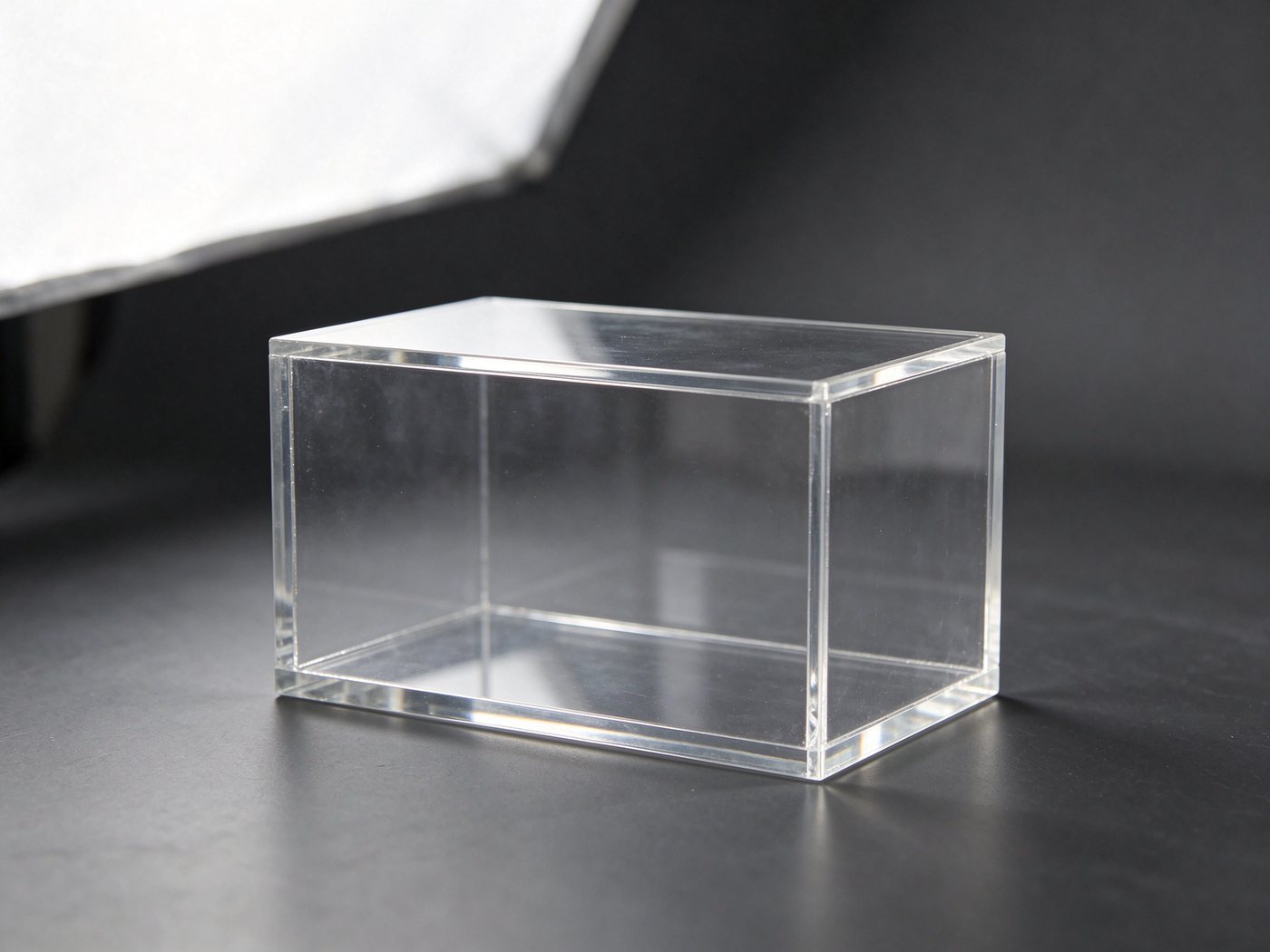
Most of our display work falls into four families: counter-top risers and step stands; five-sided vitrines with removable lids; full retail display cases with lockable doors; and multi-part tower units that combine acrylic with aluminium or zinc-alloy profiles. If your concept mixes materials, we fabricate the acrylic components and assemble the metal parts in the same shop, so tolerances line up before shipping.
All load-bearing panels are cut from cast PMMA rather than extruded sheet. Cast sheet machines cleanly, resists stress crazing at the joint, and keeps its clarity under UV and repeated cleaning agents — which matters when a display sits in a shop window for two years.
How the clarity is achieved
- CNC routing and laser cutting on a calibrated bed, so panel edges meet within ± 0.5 mm before bonding.
- Two-part acrylic adhesive applied under controlled clamping, or UV-curing adhesive for joints that must be optically invisible.
- Diamond cutter and flame polishing on exposed edges — the finish that separates a premium fixture from a cheap one.
- Annealing of thick or heavily machined parts to release internal stress, preventing cracks weeks after installation.
- Optional screen printing, UV printing, laser engraving, mirror backing, LED strip recessing and magnetic closures.
Commercial terms buyers ask about first
We quote per set, in USD, FOB Shenzhen or CIF to your port. Tooling is not required for cut-and-bond work; a one-off mould charge only applies if you want injection-moulded components such as clips, feet or edge trim. Sample sets are quoted at a prototype premium and credited back on the first production order above 200 sets.
Packing and transit
Every panel is wrapped in PE film, corner-protected with EPE foam and packed in a five-layer export carton with a plywood or honeycomb board outer case for LCL and FCL shipments. We photograph the packed cartons before dispatch and share the images with your QC team, because damage in ocean transit is the single most common failure mode for acrylic fixtures.